Players Debate Material Balancing and Early-Game Hoarding in Moonlight Peaks
From early-game inventory struggles on Misty Shores to late-game demands for recipe expansions, here is what the Moonlight Peaks community is discussing.
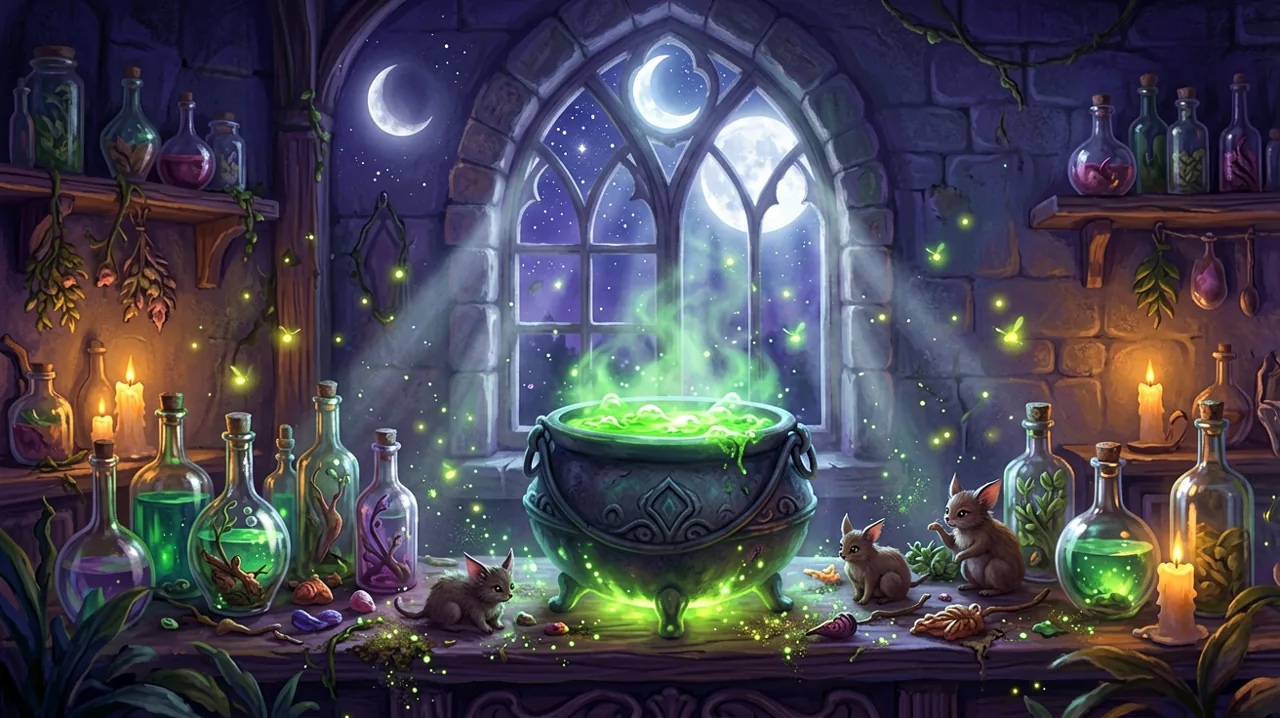
As the dust settles on the highly successful launch window of Moonlight Peaks, the player base is slowly transitioning its focus. During the first few weeks after the game hit PC, Nintendo Switch, and mobile platforms, community forums were flooded with basic questions about how to plant enchanted crops or how to trigger specific romantic events with the local werewolves and witches. Now, roughly a month and a half later, the conversation has matured. Dedicated farmers are placing the game’s economy under a microscope, examining the structural design of item progression, material utility, and inventory management.
Recent discussions across social media highlight a fascinating split in the current player experience. On one side, newer players are experiencing intense anxiety over early-game inventory limitations, unsure of what they should keep and what they should sell to maximize their profits. On the completely opposite end of the spectrum, veteran players are identifying friction points in the mid-to-late game economy, specifically regarding rare materials that suffer from a severe lack of recipe utility. This contrast provides a perfect opportunity to examine the current state of item balance in Moonlight Peaks and discuss how the developers at Little Chicken Game Company might refine these systems in the future.
The Early-Game Hoarding Dilemma: To Sell or Not to Sell?
Anyone who has spent a significant amount of time playing cozy farming simulators knows the paralyzing fear of selling a random item, only to discover three days later that it was a crucial requirement for a main story quest, a highly requested gift for a romanceable NPC, or a necessary component for a vital tool upgrade. In Moonlight Peaks, this specific brand of anxiety hits exceptionally hard around the end of the first in-game week.
A recent community post by a newer player perfectly encapsulated this struggle. The player noted that by Day 7, they had already managed to unlock both the Misty Shores coastal area and the dark cavern housing the Vampsters. Reaching these milestones within the first week of spring is a highly efficient pace, but it fundamentally breaks the early-game inventory limits. When you suddenly gain access to the beach, your pockets are instantly flooded with seashells, rare seaweed, and new varieties of coastal fish. Simultaneously, unlocking the caves introduces unique enemy drops like soul blobs, alongside various ores and gems.
For a fresh save file operating with a basic un-upgraded backpack and perhaps one or two standard storage chests, this sudden wealth of resources creates an immediate and stressful bottleneck. The question then becomes: what is the actual optimal strategy for these early-game items? Should you save the seashells and flowers? Should you keep the fish, or sell everything to afford more crop seeds? What about the random trash you pull out of the water?
The veteran community consensus offers a few firm rules for surviving the first season without going bankrupt or throwing away valuable assets. For flowers, players generally recommend keeping a dedicated stockpile of at least three to five of each color variant. Flowers are not only essential for the flower arranging hobby, but they are also frequently requested as daily gifts by several members of the seven founding families. Selling them provides very little gold compared to their immense social and crafting utility.
Fish management requires a slightly different approach. Your absolute first catch of any new species should always be marched straight over to the town museum for donation. After that duty is fulfilled, standard-quality fish are generally safe to sell directly for an early cash injection. Unlike Stardew Valley, where you might want to hoard certain fish for specific bulletin board quests, Moonlight Peaks is slightly more forgiving, allowing you to liquidate your aquatic catches to fund your agricultural expansion.
As for trash—old boots, broken glasses, and soggy newspaper—it might seem intuitive to toss it in the bin or sell it for pennies. However, holding onto it until you unlock recycling mechanisms later in the season can yield useful refined materials that are otherwise tedious to craft. Ultimately, dealing with this Day 7 bottleneck requires players to aggressively prioritize inventory upgrades and storage expansion above almost all other early farm improvements.
The Single-Use Ingredient Problem: Analyzing Plops and Luck Dust
While beginners are struggling with having too many different items to fit into their chests, players who have reached the mid-to-late game are starting to voice a completely different complaint: some of those hard-earned items just are not very useful once you actually acquire them. A highly compelling discussion surfaced recently on the game’s subreddit, sparked by a player looking at the game’s economy through the lens of a game developer.
The core of the critique centers around certain rare materials that currently suffer from having extremely limited applications. The community specifically pointed out items like “plops”—a rare byproduct typically associated with raising specific magical livestock like Draculambs—and “luck dust,” an arcane material used in high-level enchanting.
In standard game development practices for resource management titles, design teams maintain complex living documents or massive spreadsheets to track every single material in the game. The goal of this documentation is to ensure that each ingredient has a healthy, balanced number of uses across various crafting, cooking, and potion-brewing systems. If a raw material is introduced to the game but only has one specific use, the development team will typically try to either increase that number by attaching it to new recipes or remove the ingredient entirely to streamline the overall economy.
Currently, players feel that Moonlight Peaks features slightly too many ingredients that hit a dead end in the progression tree. Plops and luck dust are notoriously tedious to farm. You have to invest significant amounts of time, energy, and gold into your farm infrastructure to even begin generating them. When the eventual reward for all that effort can only be used to brew a single specific potion or craft one niche piece of furniture, the gameplay loop feels somewhat incomplete.
Once a player crafts that single attached recipe, any further accumulation of that rare ingredient becomes functionally useless. It cannot be utilized in other contexts, and selling it often feels unrewarding given the effort required to obtain it. This leads to late-game inventory bloat, where chests are filled with stacks of rare, shimmering magical materials that effectively serve no mechanical purpose.
Community Hopes for a Recipe Expansion Update
So, how can this economic friction be resolved? The most straightforward solution, and the one the community is currently clamoring for, is a dedicated recipe expansion update. By introducing a new batch of cooking recipes, arcane potions, and magical agricultural fertilizers that specifically require these bottlenecked materials, the development team could instantly revitalize the mid-game economy.
Players have already begun brainstorming potential implementations. Luck dust, for example, could be integrated into a wider variety of specialized Alter Ego Elixirs, giving players more options for their cosmetic transformations. Alternatively, it could be used as a high-tier catalyst in potion brewing to temporarily boost the drop rates of rare fish or foraging items during the night. Plops could easily be repurposed as a primary base ingredient for advanced fertilizers that accelerate the growth of the most stubborn enchanted crops, giving players a massive incentive to expand their livestock pens.
Giving players a reason to continue farming these items long after their initial discovery would significantly enhance the game’s longevity. It is highly encouraging that the developers have been exceptionally responsive to community feedback since launch. Just recently, the team released patch 1.2.6 which completely revamped bulk cooking and addressed several glaring economy exploits. Given this proactive track record, it is entirely plausible that the studio is already reviewing their material balancing spreadsheets and considering how to make every single monster drop and livestock byproduct feel inherently valuable.
Shapeshifting Mechanics Remain a Major Draw
On a slightly different note, while dedicated veterans are actively debating the finer mathematical points of material economics and single-use ingredients, the broader gaming audience is still heavily focused on the core fantasy that drew them to the game in the first place: supernatural shapeshifting. Mainstream gaming outlets and massive databases like IMDb are currently circulating and promoting comprehensive articles on how to acquire all the different forms in the game.
The ability to traverse the map by taking to the skies as a vampire bat, seamlessly explore the depths of Luna Bay by transforming into a mermaid, or prowl the nocturnal streets at high speeds as a feline is undeniably the game’s biggest mechanical selling point. Despite the game having been available for weeks, the mechanics behind unlocking these forms remain a highly searched topic online.
Some forms require progressing specific, multi-layered storylines involving the secretive seven founding families, while others demand reaching high friendship thresholds with specific supernatural residents. This ongoing, mainstream interest highlights just how engaging the game’s exploration and traversal systems truly are. Fresh waves of players are constantly arriving in town, eager to earn their wings, fins, and paws, ensuring that information regarding these fundamental mechanics remains highly relevant even as the hardcore community moves on to min-maxing their crop yields.
Looking Ahead
The evolving daily discourse around Moonlight Peaks is a testament to the game’s inherent depth and the genuine passion of its player base. Transitioning from the stressful inventory tetris of the first week to the nuanced, spreadsheet-driven economic critiques of the late game shows that players are thoroughly invested in optimizing their time on the moonlight farm. Whether you are a newcomer currently agonizing over selling a rare seashell on Day 7, or a seasoned veteran hoping for a future patch that finally makes your massive stockpile of luck dust useful, it is clear that the community remains vibrant, critical, and deeply engaged. We will be keeping a very close eye on future developer announcements to see if a recipe expansion is on the horizon to balance out the magical economy.