Decoding the Hidden Vampire Alphabet in Moonlight Peaks
A community member has successfully deciphered the hidden Vampire Alphabet. Learn how to translate runes, uncover lore, and understand the shared symbol for G and J.
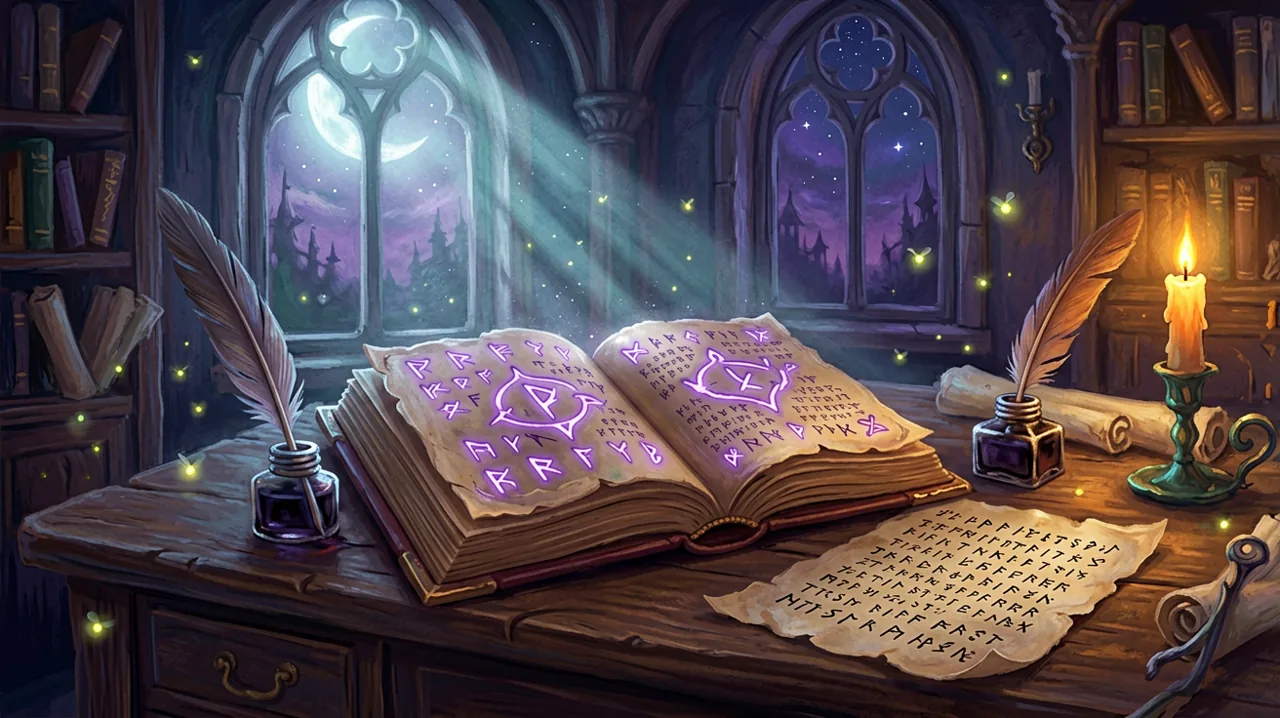
Ever since Moonlight Peaks launched, the community has been piecing together the intricate world crafted by Little Chicken Game Company. While many players have focused their efforts on expanding their farms, befriending werewolves, or brewing the perfect potion, a dedicated subset of the community has turned its attention to the environmental storytelling scattered throughout the gothic town. A recent breakthrough has finally shed light on one of the most intriguing mysteries of the game: the cryptic symbols etched into tombstones, ancient grimoires, and hidden notes.
Thanks to the tireless efforts of a community member, the in-game Vampire Alphabet has been completely deciphered. This linguistic discovery opens up an entirely new layer of immersion for those looking to understand the deep history of the Seven Families and the supernatural origins of the valley. Knowing how to read these symbols provides a rewarding excuse to revisit familiar locations and pay closer attention to the beautifully illustrated textures that decorate the environment.
The Community Breakthrough and Translation
The decipherment was spearheaded by Reddit user Nini-hime, who meticulously cataloged the various glowing runes and sharp, gothic symbols found across different in-game assets. By cross-referencing symbols found on items that have known translations—such as recognizable shop signs, standard potion labels, and introductory letters from notable townsfolk—Nini-hime managed to map out the entire English alphabet equivalent for these vampiric runes.
Historically, cozy farming simulators have often included hidden languages or codes to reward observant players. While you might recall donating scrolls to learn dwarvish in other popular titles, Moonlight Peaks weaves its written language directly into the world’s architecture. You do not need a specific in-game artifact or dictionary item to start reading the signs; you only need the translation key provided by the community.
Equipped with this alphabet, players can now start translating the flavor text that decorates the town square, the warning signs near the edge of the mystical forest, and the cryptic notes sometimes found tucked away in the corners of the local tavern. It completely changes the way you interact with the visual design of the town, turning a simple nightly stroll into a linguistic scavenger hunt.
The Curious Shared Symbol for G and J
One of the most fascinating aspects of Nini-hime’s discovery is a specific quirk in the alphabet’s design: the letters “G” and “J” share the exact same symbol.
At first glance, this might seem like a simple developer oversight or a texture space limitation, but linguistic enthusiasts in the community suspect it is a deliberate nod to historical alphabets. In classical Latin, for instance, there was no written distinction between “I” and “J”, or “U” and “V”. By merging “G” and “J” into a single rune, the developers have given the Vampire Alphabet an ancient, archaic feel. It suggests that the language evolved centuries ago, long before modern spelling conventions were fully established in the mortal world.
For players actively translating text in the game, this shared symbol creates some fun, mild translation ambiguity. When you encounter the shared rune, you have to rely on context clues to determine whether a word is spelling out a hard “G” or a soft “J”. For example, a hidden note referring to a “Grave” could technically look very similar to “Jrave”, requiring you to piece together the intended meaning based on the rest of the sentence. This small design choice adds a layer of authenticity to the experience of reading dusty, centuries-old vampiric documents, making you feel like a true supernatural scholar.
Where to Find the Vampire Alphabet in the World
Now that the translation key is widely available, you might be wondering where to start your own investigative journey. The town of Moonlight Peaks is filled with environmental text, but some locations are significantly richer in lore than others.
The Cemetery and Tombstones
The most obvious starting point is the town’s sprawling graveyard. Many of the older tombstones feature inscriptions written entirely in the Vampire Alphabet. Translating these epitaphs often reveals dark humor, tragic backstories of former residents, or subtle hints about the founding of the town. Some community-reported rumors even suggest that reading certain tombstones at specific hours of the night might provide clues to hidden item locations, though this remains entirely unconfirmed by the developers.
The Catacombs and Caverns
As you venture deeper into the caves, mining, and catacombs, you will frequently encounter ancient murals and carved warning signs. These underground areas were reportedly constructed by the earliest vampire settlers. The runes here often warn of environmental hazards or hint at the types of resources you might find on deeper floors. Taking the time to translate a warning sign might save you from wandering into a dangerous monster nest unprepared or missing a rare ore vein.
The Library and Ancient Tomes
If you are spending time researching witchcraft and spells, you will notice that many of the open spellbooks on display feature the runic script. While the actual mechanics of learning spells are handled through standard user interface menus, translating the textures of the books on the tables often yields humorous magical side effects or lists out ingredients for potions that exist in the lore but not in your actual inventory.
Nokturna Card Art
For fans of the Nokturna card game, take a closer look at the intricate art on the rarer cards. The borders and backgrounds occasionally feature tiny inscriptions. While highly speculative at this stage, some players believe that translating the text on specific cards might provide hints on the historical figures depicted on the cards or offer deeper context into the rules of the supernatural world.
Unlocking the Lore of the Seven Families
The overarching narrative of Moonlight Peaks heavily revolves around the mysteries of the Seven Families, the ancient bloodlines that quietly govern the supernatural society. Much of their history is kept deliberately vague in casual conversation, with the prominent NPCs offering only fragments of the truth to newcomers.
By translating the environmental text found in the manors and estates of the ruling class, players are beginning to piece together family trees, historical rivalries, and old alliances. These translated documents often reveal the political maneuvering that took place before the player’s arrival in the valley. For example, why is there a noticeable tension between certain vampire elders and the local witches? The answers are rarely spoken aloud, but they are written down.
Translating a seemingly mundane ledger found near the town hall might reveal ancient property disputes, while decoding a diary hidden in a crypt could expose a forbidden romance that nearly tore two prominent families apart. This hidden layer of storytelling rewards players who prefer a slower, more narrative-focused approach to their daily routines. When you are actively pursuing a relationship using our romance guide, knowing the hidden history of your partner’s family can make the dialogue choices feel much more impactful and emotionally resonant.
Potential Future Discoveries
With the Vampire Alphabet now cracked, the community is already looking toward other potential puzzles and ciphers. The game is rich with distinct cultures, including witches, werewolves, and mermaids. If the vampires have their own distinct runic language, it is highly probable that other factions do as well.
Players have noted strange claw-mark patterns near the werewolf cabins and unusual shell arrangements on the beaches. Are these simply decorative textures, or do they represent entirely different cipher systems waiting to be broken? Given the dedication of the player base, it will likely not be long before we see a werewolf translation chart or a mermaid symbol guide circulating online. In addition, as the developers continue to patch and update the game leading into future content drops, they may hide teaser information within these runic texts. Keeping the alphabet translation handy will be crucial for any lore-hunter looking to stay ahead of the curve.
How to Incorporate Translating into Your Routine
If you want to actively participate in uncovering the town’s history without breaking the relaxing pace of the game, consider dedicating one in-game day a week purely to exploration. Grab a notebook, shift into your bat form to quickly navigate the map, and start taking screenshots of any unusual text you find on walls, books, or signposts.
You can cross-reference your findings during the slower moments of your playthrough, perhaps while waiting for your draculambs and livestock to produce resources or while your mana pool slowly replenishes. This activity is incredibly rewarding because it bridges the gap between the player and the protagonist. You are not just guiding a vampire through a farming schedule; you are actively learning the history of their ancestors alongside them. As you meticulously decode a message found near a forgotten shrine, the satisfaction of uncovering a coherent sentence from a jumble of glowing symbols is immense.
To make this process easier, many players in the community are sharing custom reference sheets online, formatted to fit perfectly on a second monitor or a printed page next to your keyboard. We highly recommend keeping one of these translation keys nearby as you manage your nightly chores. Ultimately, the decipherment of the Vampire Alphabet is a testament to the passion of the Moonlight Peaks community. It highlights how much detail Little Chicken Game Company poured into the world-building, ensuring that every cracked stone and dusty book has a story to tell for those willing to read it.